Exterior paint does much more than determine how a home looks from the street. A properly maintained painted exterior also provides a finished surface over siding, trim, doors, and other exterior materials exposed to the elements.
Over time, however, that finish can begin showing signs of wear.
Fall is a useful time for homeowners to take a closer look at exterior painted surfaces and identify areas that may need professional attention. At Prime Time Painting, we recommend looking beyond color alone and paying attention to the actual condition of the paint and the surfaces beneath it.
Here are seven signs your home’s exterior paint may need attention.
1. Paint Is Peeling or Flaking
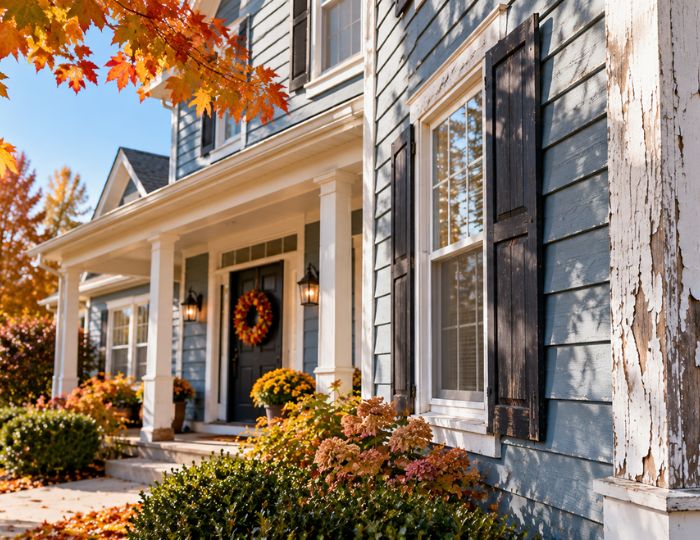
Peeling paint is one of the easiest warning signs to recognize.
You may notice small flakes around trim and windows or larger sections where the coating has begun separating from the surface.
Once paint starts losing adhesion, simply ignoring the affected area won’t restore the finish.
Professional residential exterior painting involves more than covering deteriorated paint with another coat. Surface preparation is an important part of creating a finished result.
If you’re walking around the house this fall, look closely at areas that receive substantial exposure to weather.
2. The Surface Is Cracking
Exterior paint can also develop cracks as it ages.
Some may initially appear minor, but cracking indicates that the painted finish is no longer uniform.
Pay particular attention to trim, siding, doors, and other painted architectural details.
The condition of these areas can affect the appearance of the entire exterior.
Homeowners considering broader improvements can review our tips for enhancing curb appeal for additional ideas.
3. The Color Has Noticeably Faded
Not every exterior painting concern begins with peeling.
Sometimes the first obvious change is color.
Areas receiving significant sunlight may gradually look duller or noticeably different from more protected portions of the house.
Fading can make an otherwise well-maintained exterior look older.
Our guide to selecting exterior paint for sun exposure discusses why exterior conditions should be considered when choosing coatings.
Compare Different Sides of the House
If you’re unsure whether fading has occurred, don’t judge the entire exterior from one viewpoint.
Walk around the property and compare areas receiving different levels of sunlight and exposure.
Differences can become much easier to recognize when you view painted surfaces side by side.
4. Bare Wood or Substrate Is Becoming Visible
When the material underneath the paint becomes visible, the finish has deteriorated beyond a simple cosmetic change.
This may occur where paint has peeled, chipped, or worn away.
Those exposed areas deserve attention rather than being treated as minor blemishes.
Exterior painting is most successful when the condition of the underlying surface is considered before new paint is applied.
Prime Time Painting provides professional residential painting services for homeowners planning exterior and interior improvements.
5. Caulked Joints Are Separating or Deteriorating
While inspecting exterior paint, look closely at joints around painted trim and other finished areas.
Caulk can age alongside paint.
Cracking, gaps, or separation around exterior joints can indicate that maintenance is needed before repainting.
Professional preparation should account for more than the broad painted surfaces. Details around trim, transitions, and other exterior components can have a noticeable effect on the finished appearance.
Homeowners can learn more about Prime Time Painting’s approach through the company’s frequently asked painting questions.
6. Stains or Discoloration Keep Appearing
Not every dark spot or stain means the same thing, but recurring discoloration deserves investigation before painting.
The important point is not to assume that a fresh coat of paint should simply cover every visible problem.
Professional painters evaluate and prepare the surface before applying the finish.
Painting over an unresolved surface problem can leave the underlying issue unaddressed.
Preparation is one reason homeowners often choose experienced professionals rather than treating an exterior project as a simple color change. Our article on how professional painters can save time and money discusses some of those advantages.
7. Your Exterior Simply Looks Worn and Dated
Sometimes there isn’t one dramatic failure.
Instead, the entire exterior gradually begins to look tired.
Faded siding, aging trim, worn doors, inconsistent touch-ups, and dated colors can collectively affect curb appeal.
A coordinated exterior painting project can refresh those surfaces and give the property a more consistent appearance.
If you’re considering a color or finish change, our guide to choosing the right paint finish provides additional information.
Why Fall Is a Good Time to Inspect Exterior Paint
You don’t need to wait until exterior paint looks severely deteriorated before paying attention to it.
A seasonal walkaround gives you an opportunity to identify peeling, cracking, fading, and other visible changes before they become easier to overlook during winter.
Prime Time Painting has also covered fall considerations for interior and exterior painting for homeowners planning seasonal projects.
The important part is evaluating the actual condition of the surfaces and determining the appropriate timing for the work.
Give Your Exterior a Closer Look
Stand at the curb first and evaluate the overall appearance.
Then move closer.
Inspect siding, trim, doors, and other painted surfaces for deterioration that isn’t obvious from a distance.
Professional painters can help homeowners determine which areas need attention and develop a painting plan based on the property’s condition.
If your home’s exterior is showing signs of wear, schedule a painting consultation with Prime Time Painting to discuss your project.
Key Takeaways
Peeling and flaking are clear signs that an exterior painted surface needs attention.
Cracking can indicate deterioration of the existing finish.
Sun exposure can cause exterior colors to fade unevenly.
Visible bare wood or substrate shouldn’t be ignored.
Inspect caulked joints and detailed areas along with larger painted surfaces.
Recurring stains or discoloration should be evaluated before repainting.
A professionally painted exterior can refresh a home whose overall appearance has become worn or dated.